
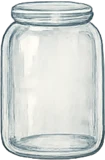
Clean jar
A clean glass jar or container with room for your starter to rise.
Starter Care
A happy starter makes delicious bread. Here is the simple Maui Wild Crust routine for feeding, storing, reviving, and knowing when your starter is ready.
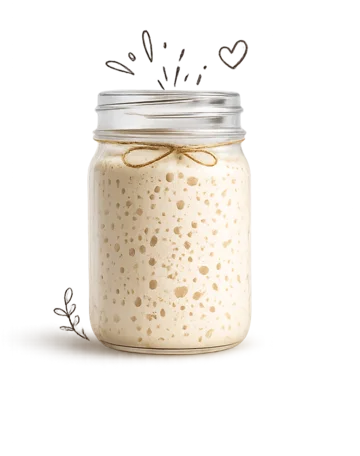
The quick answer
Mix until smooth, like thick pancake batter. Cover loosely, let it sit at room temperature, and use it when it has doubled, looks bubbly, and smells tangy, yeasty, or fruity.
Living Maui starter
Our starter is a local, living culture shaped by our kitchen, our ingredients, and our island environment. It is cared for here in our Maui kitchen and fed regularly for healthy, flavorful bakes.
What you'll need
A clean glass jar or container with room for your starter to rise.
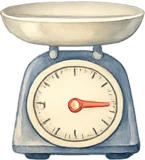
A scale gives the most consistent feeding ratio.
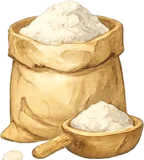
Use unbleached flour so your starter has good food.
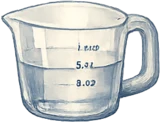
Use clean reverse osmosis filtered water, warm but not hot.

Mix until smooth, like thick pancake batter.

Mark the starting height so you can see when it doubles.
Basic feeding
This is the simple feeding rhythm from the care card: 1:2:2 by weight, or 25g starter, 50g unbleached flour, and 50g warm clean water.
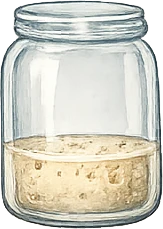
Start with 25g active starter in a clean jar.
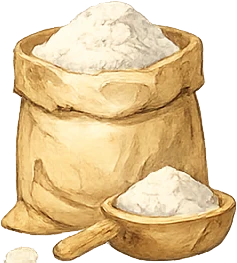
Feed it with 50g unbleached flour.
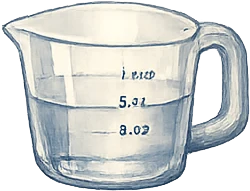
Add 50g clean reverse osmosis filtered water. Warm is good; hot can damage your starter.
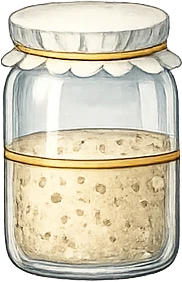
Mix until smooth, like thick pancake batter. Cover loosely so gas can escape while it rises.

Let it sit at room temperature. A healthy starter should double in about 4-5 hours.
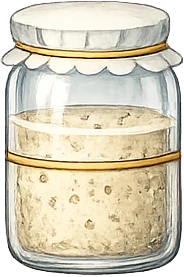
Bake when it has doubled, looks bubbly, and smells tangy, yeasty, or fruity.
Ready to bake
Your starter should double in about 4-5 hours. It is ready when it has doubled, looks bubbly, and smells tangy, yeasty, or fruity.
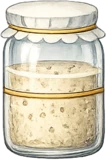
The starter rises to about twice its starting height.
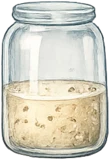
You can see bubbles through the sides and across the top.

Tangy, yeasty, fruity, or lightly sour smells are normal.
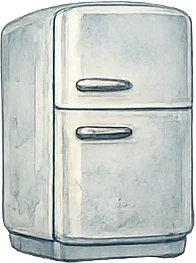
Not ready to bake?
After feeding, you can place your starter in the refrigerator right away in an airtight container. For short-term storage, keep it in the fridge for up to about one week. The fridge slows the starter down so it does not need to be fed every day.
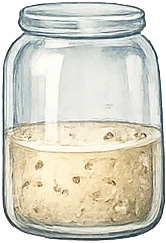
After refrigeration
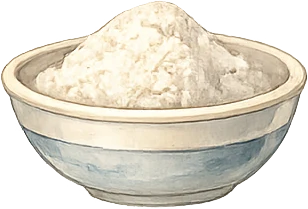
Discard explained
Discard means removing some starter before feeding. This keeps the feeding ratio balanced and prevents your starter from growing too large. Do not waste it: use discard in pancakes, waffles, muffins, crackers, pizza dough, and more.
Simple routine
Keep your starter on the counter and feed it regularly so it stays active and ready.
Keep your starter in the fridge and feed it about once a week for short-term storage.

Feed your starter and wait until it doubles before using it in dough.
Starter health guide

Warm water helps wake your starter. Hot water can damage it.
Unbleached flour feeds a starter more reliably than bleached flour.

A warm spot is helpful, but avoid direct hot sun.
Tangy, fruity, sour, or yeasty smells usually mean your starter is doing its thing.

Gray liquid can be poured off or stirred in before feeding.

Fuzzy mold or pink/orange colors mean it is safest to throw it away and start fresh.
Decision helper
Tap the situation that matches your jar.
Feeding calculator
The guide uses 25g starter, but the pattern is simple: 1:2:2 by weight, or twice as much flour and twice as much water as the starter you keep.
Add flour
g
Add water
g
Save this card
Feed
25g + 50g + 50g
Cover
Loosely
Ready
Doubled & bubbly
Fridge
Up to 1 week
Fuzzy mold or pink/orange colors mean it is safest to throw it away and start fresh.
Need starter or bread?
Maui Wild Crust sells living Maui starter cared for in our kitchen and fed regularly for healthy, flavorful bakes. If your starter is waking up slowly, you can also order fresh sourdough from our Pukalani bakehouse.
Questions
Keep 25g active starter, then feed it with 50g unbleached flour and 50g warm clean water. Mix until smooth, cover loosely, and let it rise at room temperature.
It is ready when it has doubled, looks bubbly, and smells tangy, yeasty, or fruity. A healthy starter often doubles in about 4-5 hours after feeding.
No. Cover it loosely while it rises so gas can escape. A tight seal can build pressure in the jar.
After feeding, you can place your starter in the refrigerator right away in an airtight container for short-term storage, up to about one week.
Take it out of the fridge, let it warm a bit, discard some leaving 25g starter, then feed with 50g flour and 50g warm clean water. Cover loosely and let it sit at room temperature until doubled, bubbly, and active.
Discard means removing some starter before feeding. This keeps the feeding ratio balanced and prevents your starter from growing too large. You can use discard in pancakes, waffles, muffins, crackers, pizza dough, and more.
Gray liquid is usually hooch. You can pour it off or stir it in before feeding.
If you see fuzzy mold or pink/orange colors, it is safest to throw it away and start fresh.
Maui Wild Crust sells living Maui starter cared for in our kitchen and fed regularly for healthy, flavorful bakes.